It's a strange time we live in. Never before has popular public opinion been so obsessed with being thin. Yet the statistics tell us that obesity is at an all time high!
While we stare at thin women and muscled men, - the reality is, a good proportion of us are struggling with our weight.
It is no surprise that prescriptions of anti-depressant medicines are also very high in the Western world. We are not a happy people. For many of us struggling to lose weight, we are bombarded with a constant media barrage of "THIN IS IN".
The Truth versus The Lies
It is hard to find someone who is happy with their body. We all carry around some kind of distorted body image. But are you telling yourself the truth?
What is motivating you to lose weight? Whose rules are you living by? Is there such a thing as an ideal body weight? Does it really matter? Health issues occur at both extremes of the scale (very thin or very fat).
So why not be happy with your current weight?
The Fashion Industry Myth
The fashion industry would have you believe that unless you are stick-thin and skeletal you have not achieved the ideal weight loss goal. This is a lie.
Most women carry around 23% body fat and the average man around 17%. In fact if a woman is too thin, she can experience menstrual problems and hormone production problems. Women were not meant to be that thin - and indeed most advertising often show normal sized people putting pressure on themselves to lose weight. There is a terrible paradox going on here where the pressure to diet has moved beyond obesity problems, and become a food obsession that only fuels the prevalence of eating disorders.
Improving Your Body Image
"I am not my body"
Every time you look at yourself in the mirror, say to yourself "I am not my body". In our culture our physical self has become enmeshed with our identity, our soul, or who we are. You are more than just a body - you are a unique person with your own thoughts, feelings, spirit, and soul. If you have fat thighs, say "I have fat thighs", rather than "I am really fat". Separating your identity as a person from your physical body is a step in the right direction.
Believe In Yourself
Stop getting down on yourself, and constantly worrying about your weight. Set yourself a long-term goal. But remember this - having a thin body will not make you happy. Only you have the power to choose to be happy (at whatever weight you are).
Go Easy With The Scales
No matter how many times you stand on those scales, it's not going to change your weight. Weighing yourself daily is unnecessary. Set aside one day a week to weigh yourself. Make sure it is the same time each week and that you are consistent in what you are wearing (or not wearing!).
Choose Your Friends Wisely
Many of us (particularly teenagers) hang around with the wrong people. If you have a friend that is obsessed with the way they look, then this influence will rub off. Spend time with friends who accept you for you - not your clothing labels or size.
Monitor Your Self Talk
A wise man once said "You are what you think". This isn't meant to be a deception. Thinking "I am slim I am slim" doesn't make you slim. But thinking about where you are headed and where you will be is a great motivator. "I may have fat thighs but I am becoming healthier and fitter everyday."
Feed Your Mind On What Is Good For You
Many TV programs, movies, and magazines give a very distorted view of reality. The cast of many shows come from a modeling agency rather than from a general selection of the population. Popular media is obsessed with looks. Many popular sitcoms portray a values system that is based around physical appearance more than anything else. Watch what you feed your mind on. A good portion of the advertising industry is based around making you feel like you are not good enough, so you must buy product X.
8 Aralık 2007 Cumartesi

Top 7 Excuses and How to Beat Them
How to beat them.
1. "I Hate Exercise"
Health authorities recommend a minimum of 30 minutes exercise per day. Many people plan exercise but then fail to commit to it.
Try introducing more 'incidental' activity into your day. Take the stairs, walk instead of taking the car. Try wearing a pedometer to see how active you really are.
2. "I Don't Have Time to Eat Healthy"
Do you have the time to be sick? Taking time out to look after your body is time well spent. This includes always making adequate time for breakfast.
3. "I Cannot Live Without Chocolate / Ice Cream"
When you think of certain foods as 'bad' - whenever you eat those foods you will feel guilty. If you can eat those foods in a positive environment - then you will have a better chance at choosing a small portion size.
Also consider swapping the food for something with a similar flavor - but less calorie-dense
4. "I Don't / Can't Cook"
Most supermarkets offer many pre-made foods - frozen meals, prepared salads and pastas. Learn to understand food labels. You do not have to be a chef to cook healthy food.
5. "I Don't Have the Support of Family & Friends"
Sometimes you may need to tell people what you are trying to achieve. This is important in social situations where food is on the agenda. Communicate with those around you exactly what you are expecting from them - don't try and second-guess their responses.
6. "I Eat Out All The Time"
It is possible to lose weight while eating out a lot - but you must become very adept at selecting your food.
* Avoid chips, fried rice, wedges as an accompaniment. Order a side salad or vegetables instead.
* Choose a medium/small portion
* Avoid entrees - they are typically high in fat
* Drink plenty of water with the meal
* When choosing a main meat - choose fish, followed by chicken, then red meat. Grilled or poached is usually the best option.
7. "I Have to Cook Meals for my Family"
Rather than having one person on a strict diet - try gradually altering the eating style of the whole family. This will mean substituting regular meals with healthier options - such as skinless chicken breast instead of beef mince, and vegetables instead of large portions of starchy carbohydrates.
1. "I Hate Exercise"
Health authorities recommend a minimum of 30 minutes exercise per day. Many people plan exercise but then fail to commit to it.
Try introducing more 'incidental' activity into your day. Take the stairs, walk instead of taking the car. Try wearing a pedometer to see how active you really are.
2. "I Don't Have Time to Eat Healthy"
Do you have the time to be sick? Taking time out to look after your body is time well spent. This includes always making adequate time for breakfast.
3. "I Cannot Live Without Chocolate / Ice Cream"
When you think of certain foods as 'bad' - whenever you eat those foods you will feel guilty. If you can eat those foods in a positive environment - then you will have a better chance at choosing a small portion size.
Also consider swapping the food for something with a similar flavor - but less calorie-dense
4. "I Don't / Can't Cook"
Most supermarkets offer many pre-made foods - frozen meals, prepared salads and pastas. Learn to understand food labels. You do not have to be a chef to cook healthy food.
5. "I Don't Have the Support of Family & Friends"
Sometimes you may need to tell people what you are trying to achieve. This is important in social situations where food is on the agenda. Communicate with those around you exactly what you are expecting from them - don't try and second-guess their responses.
6. "I Eat Out All The Time"
It is possible to lose weight while eating out a lot - but you must become very adept at selecting your food.
* Avoid chips, fried rice, wedges as an accompaniment. Order a side salad or vegetables instead.
* Choose a medium/small portion
* Avoid entrees - they are typically high in fat
* Drink plenty of water with the meal
* When choosing a main meat - choose fish, followed by chicken, then red meat. Grilled or poached is usually the best option.
7. "I Have to Cook Meals for my Family"
Rather than having one person on a strict diet - try gradually altering the eating style of the whole family. This will mean substituting regular meals with healthier options - such as skinless chicken breast instead of beef mince, and vegetables instead of large portions of starchy carbohydrates.
24 Kasım 2007 Cumartesi
Emotional Eating
The basics of weight loss is all about diet and exercise. However, it's no good getting a diet plan if you can't stop putting food in your mouth.
A full comprehensive 8 week course on overeating and other issues is available here.
There are more than enough good diet plans and programs out there (see our reviews). The issue for many people is motivation, dedication, and consistency. For without these factors we often end up disappointed.
Eating is very habitual and our eating patterns become a ritual. Every day we are faced with food choices, and it can become daunting. This is why many of our poor food choices aren't so much choices, but have become a daily ritual.
The Good News About Habits
Even though our eating has become a habit (such as snacking all day, eating junk food when we sit down in front of the TV) - it is possible to change our habits and create new ones
If food is meeting an emotional need in your life, perhaps it's time to examine this, and determine exactly what the need is. For some it can be boredom, others it can be loneliness, the stresses of life, or perhaps it is a ritual that comes from childhood.
Managing Hunger
Many of us have forgotten how to manage our hunger. We leave it until we are hungry before we choose our food. Inevitably we make poor choices, or can even start binging. This can be prevented by fueling our bodies every 3 hours with healthy food. Beware of diet plans that only prescribe 3 meals a day.
We also have to learn what it is to be full. If we can learn to listen to our bodies we can stop eating. It's okay to leave food on your plate!
The Power Of Junk Food
There is something about junk food that has a special pull. It's almost addictive. Be aware of the role junk foods play in your life, and try to get rid of them.
Learning to Focus On Goals
If you set a specific goal for yourself you will find it is far easier to keep motivated. Everytime you reach for some comfort food, you can train yourself to respond with your goal. "Will this help me reach my goal?" It can take real dedication to keep with the plan. Focus on the goal every day.
Freedom to Fail
If you overindulge, don't fall off the wagon. Don't tell yourself you're a failure. It's okay - eat better the next meal, or maybe exercise more. Feeling like you are constantly deprived can lead to binging, and can play real mind games.
Getting Help
There are some good resources in this area. One such weight loss program is the Personality Type Diet - this addresses issues about why we eat - not just what to eat.
Mastering Food deals solely with emotional and behavioral issues (it is not a diet plan).
Failing this, behavioral approaches such as Cognitive-Behavioral therapy are helpful in addressing these problems.
A full comprehensive 8 week course on overeating and other issues is available here.
There are more than enough good diet plans and programs out there (see our reviews). The issue for many people is motivation, dedication, and consistency. For without these factors we often end up disappointed.
Eating is very habitual and our eating patterns become a ritual. Every day we are faced with food choices, and it can become daunting. This is why many of our poor food choices aren't so much choices, but have become a daily ritual.
The Good News About Habits
Even though our eating has become a habit (such as snacking all day, eating junk food when we sit down in front of the TV) - it is possible to change our habits and create new ones
If food is meeting an emotional need in your life, perhaps it's time to examine this, and determine exactly what the need is. For some it can be boredom, others it can be loneliness, the stresses of life, or perhaps it is a ritual that comes from childhood.
Managing Hunger
Many of us have forgotten how to manage our hunger. We leave it until we are hungry before we choose our food. Inevitably we make poor choices, or can even start binging. This can be prevented by fueling our bodies every 3 hours with healthy food. Beware of diet plans that only prescribe 3 meals a day.
We also have to learn what it is to be full. If we can learn to listen to our bodies we can stop eating. It's okay to leave food on your plate!
The Power Of Junk Food
There is something about junk food that has a special pull. It's almost addictive. Be aware of the role junk foods play in your life, and try to get rid of them.
Learning to Focus On Goals
If you set a specific goal for yourself you will find it is far easier to keep motivated. Everytime you reach for some comfort food, you can train yourself to respond with your goal. "Will this help me reach my goal?" It can take real dedication to keep with the plan. Focus on the goal every day.
Freedom to Fail
If you overindulge, don't fall off the wagon. Don't tell yourself you're a failure. It's okay - eat better the next meal, or maybe exercise more. Feeling like you are constantly deprived can lead to binging, and can play real mind games.
Getting Help
There are some good resources in this area. One such weight loss program is the Personality Type Diet - this addresses issues about why we eat - not just what to eat.
Mastering Food deals solely with emotional and behavioral issues (it is not a diet plan).
Failing this, behavioral approaches such as Cognitive-Behavioral therapy are helpful in addressing these problems.
What is Yo-Yo Dieting?
How many times have you successfully lost weight -- only to gain it again further down the track? Some people struggle with this for most of their lives. This is "yo-yo" dieting - a continuing pattern of gaining and losing weight. Sometimes it is called "weight cycling".
What Causes Yo-yo Dieting?
When your diet includes bouts of starvation, missing meals, or very low calories - you are setting yourself up for the yo-yo effect. While it seems that good results can be achieved quickly, sooner or later, the body gets the hint that less calories are coming in. The body adapts, and decides that energy must be conserved - and metabolism (the way the body burns food for energy) begins to slow down. Often this can be a 'plateau' - the weight loss that was initially achieved begins to slow down or stop.
Many people hit the wall at this point, and, struggling to maintain the diet, the weight begins to come back on. And what's even worse, is that for some people, the lowered metabolism means they end up with more weight than what they started at!
This is one of the problems with dieting (as a sudden fad) - the body's metabolism becomes less efficient with each dieting episode. The severe calorie restriction also causes loss of muscle tone. Less muscle once again means a slower metabolism. The commons signs of this are flabby upper arms (due to loss of tricep muscle tone and subsequent fat gain).
Alternatives to the Yoyo
It is a mental and emotional blow to go through all that dieting, just to be back where you started.
Rather than suddenly dieting - hoping for a quick weight loss, it is better to take a more long term sustainable approach.
* Aim for modest weight loss (even small amounts of lost fat can improve your health)
* If lowering calories do it slowly (i.e. don't suddenly drop 1000 calories per day).
* Think of your diet as a healthy eating plan.
* Look to change your lifestyle (activity levels and what and when and why you eat).
* To break the weight loss plateau you need to give your metabolism a boost. Aim to increase your levels of physical activity. And if you are missing meals or eating too few calories you need to take a serious look at your diet and aim to eat more often (every 3 hours).
* Don't skip breakfast.
* Can you imagine still being on your "current" diet 1 year from now?
What Causes Yo-yo Dieting?
When your diet includes bouts of starvation, missing meals, or very low calories - you are setting yourself up for the yo-yo effect. While it seems that good results can be achieved quickly, sooner or later, the body gets the hint that less calories are coming in. The body adapts, and decides that energy must be conserved - and metabolism (the way the body burns food for energy) begins to slow down. Often this can be a 'plateau' - the weight loss that was initially achieved begins to slow down or stop.
Many people hit the wall at this point, and, struggling to maintain the diet, the weight begins to come back on. And what's even worse, is that for some people, the lowered metabolism means they end up with more weight than what they started at!
This is one of the problems with dieting (as a sudden fad) - the body's metabolism becomes less efficient with each dieting episode. The severe calorie restriction also causes loss of muscle tone. Less muscle once again means a slower metabolism. The commons signs of this are flabby upper arms (due to loss of tricep muscle tone and subsequent fat gain).
Alternatives to the Yoyo
It is a mental and emotional blow to go through all that dieting, just to be back where you started.
Rather than suddenly dieting - hoping for a quick weight loss, it is better to take a more long term sustainable approach.
* Aim for modest weight loss (even small amounts of lost fat can improve your health)
* If lowering calories do it slowly (i.e. don't suddenly drop 1000 calories per day).
* Think of your diet as a healthy eating plan.
* Look to change your lifestyle (activity levels and what and when and why you eat).
* To break the weight loss plateau you need to give your metabolism a boost. Aim to increase your levels of physical activity. And if you are missing meals or eating too few calories you need to take a serious look at your diet and aim to eat more often (every 3 hours).
* Don't skip breakfast.
* Can you imagine still being on your "current" diet 1 year from now?
I Want a Weight Loss Buddy
A weight loss buddy can be a great aid to motivation. This is someone to encourage you, commiserate with you, and help you to stay the course.
"No man is an island..." - John Donne
Why do you think athletes have coaches? Students have mentors? We are relational people at heart, and it takes a special person who can single-handedly motivate themselves toward a goal.
Where Do I Find a Weight Loss Buddy?
Weight Loss Buddy is a site that is dedicated to connecting up weight loss buddies - and does a fantastic job of it.
Community-based Weight Loss Programs
Thanks to the Internet we can easily communicate with people from all over the planet. However, sometimes we may need someone to be geographically close (particularly regarding exercise). Here are some programs we have reviewed:
Diet.com - This new-ish weight loss program is heavily based on the 'buddy' concept. They have taken it further than this; there are 'cheerleaders', support groups, and all sorts of options. Their program also allows you to find someone who matches your personality type!
Social Networks
Many weight loss sites are now offering "social networking" tools. These allow users to relate and connect with one another easier and write blogs.
Some example sites: SparkPeople, LosingIt, ExtraPounds.
Success Story
It all started in the cereal aisle at the Shop Rite in Teaneck, New Jersey. I was pouring over the ingredient lists of various brands looking for a whole grain cereal that wouldn't taste like cardboard. I noticed another woman checking out the cereal ingredients, too, so we struck up a conversation.
We started complaining about cereal but quickly shared our bigger concern: We were both having trouble losing weight. Neither one of us could resist the treats we bought “for our kids,” nor exercise kept falling off the priority list.
Then Wendy had an idea that would change both our lives forever. "Why don't we be `Weight Loss Buddies?'" she suggested. The very next morning we began taking long walks together and checking in with each other about what we were eating. She gave me a pep talk via cell phone to help me stay on track over the holidays. I helped her find time to exercise when her work got overwhelmingly busy. We tried out low-fat recipes in her kitchen and created a menu that would help us reach a goal-without starting a war with our families!
Over the next several months, I lost 25 pounds and Wendy lost 30. We looked and felt better than we had in years-and we had both made an incredible friend.
Wendy and I founded Weight Loss Buddy to help other people find the same support that was critical to our weight loss success. We know you'll love working with your Weight Loss Buddy, and we know you'll lose the weight!
"No man is an island..." - John Donne
Why do you think athletes have coaches? Students have mentors? We are relational people at heart, and it takes a special person who can single-handedly motivate themselves toward a goal.
Where Do I Find a Weight Loss Buddy?
Weight Loss Buddy is a site that is dedicated to connecting up weight loss buddies - and does a fantastic job of it.
Community-based Weight Loss Programs
Thanks to the Internet we can easily communicate with people from all over the planet. However, sometimes we may need someone to be geographically close (particularly regarding exercise). Here are some programs we have reviewed:
Diet.com - This new-ish weight loss program is heavily based on the 'buddy' concept. They have taken it further than this; there are 'cheerleaders', support groups, and all sorts of options. Their program also allows you to find someone who matches your personality type!
Social Networks
Many weight loss sites are now offering "social networking" tools. These allow users to relate and connect with one another easier and write blogs.
Some example sites: SparkPeople, LosingIt, ExtraPounds.
Success Story
It all started in the cereal aisle at the Shop Rite in Teaneck, New Jersey. I was pouring over the ingredient lists of various brands looking for a whole grain cereal that wouldn't taste like cardboard. I noticed another woman checking out the cereal ingredients, too, so we struck up a conversation.
We started complaining about cereal but quickly shared our bigger concern: We were both having trouble losing weight. Neither one of us could resist the treats we bought “for our kids,” nor exercise kept falling off the priority list.
Then Wendy had an idea that would change both our lives forever. "Why don't we be `Weight Loss Buddies?'" she suggested. The very next morning we began taking long walks together and checking in with each other about what we were eating. She gave me a pep talk via cell phone to help me stay on track over the holidays. I helped her find time to exercise when her work got overwhelmingly busy. We tried out low-fat recipes in her kitchen and created a menu that would help us reach a goal-without starting a war with our families!
Over the next several months, I lost 25 pounds and Wendy lost 30. We looked and felt better than we had in years-and we had both made an incredible friend.
Wendy and I founded Weight Loss Buddy to help other people find the same support that was critical to our weight loss success. We know you'll love working with your Weight Loss Buddy, and we know you'll lose the weight!
Fast Weight Loss - Is it Possible?
A typical weight loss program aims for fat loss in the region of 1-2 pounds per week (1/2 to 1 kg). The reason for this is to prevent subsequent weight gain due to the body suffering a rapid lowering in metabolism and to prevent loss of muscle.
However, there is a place for faster weight loss in certain circumstances. Fast weight loss is only really appropriate for those who are very overweight. Any rapid weight loss regime is not appropriate for those only looking to lose 2-25 pounds.
Do Any Fast Weight Loss Plans Work?
There are a number of quick weight loss programs that attempt to provide a nutritional balance whilst still providing low calories. One such program is Medifast - this is a successful program used by a number of doctors for many years. Weight loss is in the region of 2-5 pounds per week (see Medifast Review).
There are a number of other diets that fall into the category of a VLCD (Very Low Calorie Diet) - this is where daily calorie intake is 800 calories or less. These diets - such as the Cambridge Diet or OptiFast really do need to be medically supervised due to the possible side effects.
These diets typically consist of meal replacement products and can only be sustained in the short term.
What Are The Risks Of Quick Weight Loss?
Most diets that claim fast weight loss are very low in calories. Unless properly balanced and supervised, there can be nutritional deficiencies that can cause potential health problems.
Along with extremely restrictive calories often comes fatigue and irritability, and even other issues such as constipation due to a lack of fiber.
The other issue is a lowered metabolism that can begin a pattern of yoyo dieting. Depending on your goals, fast weight loss can also include loss of muscle mass (catabolism) as well as fat - this is not desirable.
Who Can Use a Fast Weight Loss Program?
Weight loss programs that offer rapid weight loss are generally only suitable for people who are obese (a BMI of 30 and above). A person who is only mildly overweight will only really cause themselves problems in the long run.
Some VLCD's need a doctors authorization, but other fast weight loss diets (such as Medifast) may be done without this.
What About Claims By Popular Diets?
Many popular diets, such as the South Beach Diet, Atkins, the Hampton's Diet offer a 2 week "induction" phase during which weight loss is substantial. However this is only really due to a severe restriction of carbohydrates where most that is lost is typically fluid or water weight.
However, there is a place for faster weight loss in certain circumstances. Fast weight loss is only really appropriate for those who are very overweight. Any rapid weight loss regime is not appropriate for those only looking to lose 2-25 pounds.
Do Any Fast Weight Loss Plans Work?
There are a number of quick weight loss programs that attempt to provide a nutritional balance whilst still providing low calories. One such program is Medifast - this is a successful program used by a number of doctors for many years. Weight loss is in the region of 2-5 pounds per week (see Medifast Review).
There are a number of other diets that fall into the category of a VLCD (Very Low Calorie Diet) - this is where daily calorie intake is 800 calories or less. These diets - such as the Cambridge Diet or OptiFast really do need to be medically supervised due to the possible side effects.
These diets typically consist of meal replacement products and can only be sustained in the short term.
What Are The Risks Of Quick Weight Loss?
Most diets that claim fast weight loss are very low in calories. Unless properly balanced and supervised, there can be nutritional deficiencies that can cause potential health problems.
Along with extremely restrictive calories often comes fatigue and irritability, and even other issues such as constipation due to a lack of fiber.
The other issue is a lowered metabolism that can begin a pattern of yoyo dieting. Depending on your goals, fast weight loss can also include loss of muscle mass (catabolism) as well as fat - this is not desirable.
Who Can Use a Fast Weight Loss Program?
Weight loss programs that offer rapid weight loss are generally only suitable for people who are obese (a BMI of 30 and above). A person who is only mildly overweight will only really cause themselves problems in the long run.
Some VLCD's need a doctors authorization, but other fast weight loss diets (such as Medifast) may be done without this.
What About Claims By Popular Diets?
Many popular diets, such as the South Beach Diet, Atkins, the Hampton's Diet offer a 2 week "induction" phase during which weight loss is substantial. However this is only really due to a severe restriction of carbohydrates where most that is lost is typically fluid or water weight.
Why Do I Lose Fat in the Wrong Places?
Layer by Layer
Many people compare subcutaneous fat to the layers of an onion. Rather than disappearing from a particular place, it comes off layer by layer from the whole body.
Moreover, the way fat is shed is different from person to person. It tends to go from the most recent place it appeared. If your tummy started gaining first - this will be the very last place for the fat to disappear from.
This is why, for example, a man may complain of getting too thin in the face - and yet still have a small 'spare tire' around his waist. Or a woman may complain of a smaller bust, and yet the hips may have barely moved in inch.
Complications of Cellulite
This is further compounded by cellulite. With cellulite tissue, fatty acids are contained in a net of fibrous connective tissue. As fat loss occurs the net becomes compressed - making it difficult for the blood supply to readily remove the fat from these stubborn areas.
Targeting Certain Areas
There are variations between men and women, and with the use of exercise.
* Obese men tend to lose more visceral (internal) fat while obese women lose more subcutaneous fat (reference).
* Exercise seems to result in more subcutaneous fat loss. Diet alone results in more visceral fat loss (and less surface fat loss) (reference). This explains how you can lose weight - but not necessarily have any radical change in appearance.
Spot Reduction Is Not Workable
There is very little you can do to influence specific subcutaneous fat distribution. Exercise should always be a part of any fat loss program - but vigorously exercising a specific body part will not have any influence on local fat in that area.
This myth has been debunked again and again. Neither will high-repetition (e.g. 20-30 reps) weight training lead to greater fat loss. In fact the loss of intensity may ultimately result in less fat loss than lower-reps with heavier weights. Higher reps are good for muscular endurance.
Everybody is Different
It can be very frustrating but everybody is different. Stay committed to your training and nutrition - and don't be dissuaded by the commercials and images that show perfectly proportioned clones.
Understand how your body works, and set achievable goals accordingly
Many people compare subcutaneous fat to the layers of an onion. Rather than disappearing from a particular place, it comes off layer by layer from the whole body.
Moreover, the way fat is shed is different from person to person. It tends to go from the most recent place it appeared. If your tummy started gaining first - this will be the very last place for the fat to disappear from.
This is why, for example, a man may complain of getting too thin in the face - and yet still have a small 'spare tire' around his waist. Or a woman may complain of a smaller bust, and yet the hips may have barely moved in inch.
Complications of Cellulite
This is further compounded by cellulite. With cellulite tissue, fatty acids are contained in a net of fibrous connective tissue. As fat loss occurs the net becomes compressed - making it difficult for the blood supply to readily remove the fat from these stubborn areas.
Targeting Certain Areas
There are variations between men and women, and with the use of exercise.
* Obese men tend to lose more visceral (internal) fat while obese women lose more subcutaneous fat (reference).
* Exercise seems to result in more subcutaneous fat loss. Diet alone results in more visceral fat loss (and less surface fat loss) (reference). This explains how you can lose weight - but not necessarily have any radical change in appearance.
Spot Reduction Is Not Workable
There is very little you can do to influence specific subcutaneous fat distribution. Exercise should always be a part of any fat loss program - but vigorously exercising a specific body part will not have any influence on local fat in that area.
This myth has been debunked again and again. Neither will high-repetition (e.g. 20-30 reps) weight training lead to greater fat loss. In fact the loss of intensity may ultimately result in less fat loss than lower-reps with heavier weights. Higher reps are good for muscular endurance.
Everybody is Different
It can be very frustrating but everybody is different. Stay committed to your training and nutrition - and don't be dissuaded by the commercials and images that show perfectly proportioned clones.
Understand how your body works, and set achievable goals accordingly
22 Kasım 2007 Perşembe
Body Shape - am I an Apple or Pear?
Body Shape - am I an Apple or Pear?
Most women generally fall into a single body shape classification - the Apple shape, or the Pear shape. These body shapes have significant implications for both health and weight loss.
However recent research has shown that a woman's figure can be classified in a number of different ways.
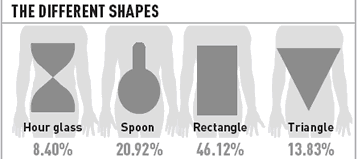
Hourglass
Bust and hips are basically the same circumference - though the bust can be up to 1" larger than the hips. The waist is then 9" or more smaller than the bust.
Spoon
Where the hips are 2" or more larger than the bust. The waist is less than 9.25" smaller than the bust.
Rectangle
Where the bust and hips are basically the same circumference. The waist is less than 9" smaller than the bust.
Triangle
The bust is 3.6" larger than the hips and the waist is less than 9" smaller than the bust.
What about Apples or Pears?
Apple and pear classifications are useful in determining body fat distribution. It is generally thought that there are more health risks for the apple shape. This can be determined by measuring your waist to hip ratio. A ratio of 0.8 or above indicates that you are an apple shape. A ratio of under 0.8 means you are a pear shape.
Apples
The apple shaped woman carries most her body fat in the abdominal region. She will generally have narrow hips, larger breasts, and a relatively large waist. Apple-shaped women have more fat surrounding their internal organs (visceral fat).
This kind of fat presents many more risks than subcutaneous fat; it decreases insulin sensitivity, raises blood pressure, and decreases levels of 'good' (HDL) cholesterol. These are all key indicators of heart disease risk and diabetes risk.
The higher the waist to hip ratio, the higher the risk.
Pears
The pear-shaped woman carries most of her body fat around the hips, thighs, and buttocks. She will generally have a smaller upper body (smaller breasts) and a heavier lower body.
The risks for the overweight pear-shaped woman are quite different to the apple shape. A pear-shaped woman will typically be more susceptible to cellulite and varicose veins - and to eating disorders. However the pear-shaped woman does not carry the same kind of health problems that the apple shape does.
Due to popular culture's obsession with rail-thin women, there is considerable pressure on women to be a certain shape. However even when a pear-shaped woman loses weight - she is still a pear shape. This unrealistic pressure can lead many (often young women) down the path to disordered eating and body image problems.
Weight Loss for Apples and Pears
There are some who believe that a specific dietary regimen will help each body shape.:
Apples
Lower carbohydrate diet (avoiding processed and 'white' carbs).
Pears
Lower fat diet (avoiding full fat foods; cheeses, butter).
Most women generally fall into a single body shape classification - the Apple shape, or the Pear shape. These body shapes have significant implications for both health and weight loss.
However recent research has shown that a woman's figure can be classified in a number of different ways.
Hourglass
Bust and hips are basically the same circumference - though the bust can be up to 1" larger than the hips. The waist is then 9" or more smaller than the bust.
Spoon
Where the hips are 2" or more larger than the bust. The waist is less than 9.25" smaller than the bust.
Rectangle
Where the bust and hips are basically the same circumference. The waist is less than 9" smaller than the bust.
Triangle
The bust is 3.6" larger than the hips and the waist is less than 9" smaller than the bust.
What about Apples or Pears?
Apple and pear classifications are useful in determining body fat distribution. It is generally thought that there are more health risks for the apple shape. This can be determined by measuring your waist to hip ratio. A ratio of 0.8 or above indicates that you are an apple shape. A ratio of under 0.8 means you are a pear shape.
Apples
The apple shaped woman carries most her body fat in the abdominal region. She will generally have narrow hips, larger breasts, and a relatively large waist. Apple-shaped women have more fat surrounding their internal organs (visceral fat).
This kind of fat presents many more risks than subcutaneous fat; it decreases insulin sensitivity, raises blood pressure, and decreases levels of 'good' (HDL) cholesterol. These are all key indicators of heart disease risk and diabetes risk.
The higher the waist to hip ratio, the higher the risk.
Pears
The pear-shaped woman carries most of her body fat around the hips, thighs, and buttocks. She will generally have a smaller upper body (smaller breasts) and a heavier lower body.
The risks for the overweight pear-shaped woman are quite different to the apple shape. A pear-shaped woman will typically be more susceptible to cellulite and varicose veins - and to eating disorders. However the pear-shaped woman does not carry the same kind of health problems that the apple shape does.
Due to popular culture's obsession with rail-thin women, there is considerable pressure on women to be a certain shape. However even when a pear-shaped woman loses weight - she is still a pear shape. This unrealistic pressure can lead many (often young women) down the path to disordered eating and body image problems.
Weight Loss for Apples and Pears
There are some who believe that a specific dietary regimen will help each body shape.:
Apples
Lower carbohydrate diet (avoiding processed and 'white' carbs).
Pears
Lower fat diet (avoiding full fat foods; cheeses, butter).
Am I an Endomorph, Ectomorph, or Mesomorph?
If you are looking for information about Apples and Pears - read the article about Body Shape.
Every person has unique genetic traits. Every piece of advice you receive regarding weight loss must be applied against your knowledge of your own constitution, metabolism, and genetic makeup.
The study of somatyping classifies body types into 3 main groups - ectomorph, endomorph, and mesomorph (the suffix morph comes from Greek morphos, and means form, shape, or structure). Of course, it is rare to find a person whose body type falls completely into one of these groups. Most of us share a mix of these genetic traits.
The Mesomorph
The mesomorph is the person we all love to hate - and are secretly jealous of. They have the following characteristics:
- Naturally muscular
- Naturally lean
- Broad shoulders
- Lose fat easily
- Gain muscle and strength easily
- Efficient and fast-burning metabolism
These people are generally gifted bodybuilders and athletes. If you found your way to this web site, the chances are you are not predominantly mesomorph.
The Endomorph
This body type stores fat very easily, and finds it hard to lose the fat. An endomorph often has a sluggish metabolism, and must be particularly careful with their diet. Here are some common characteristics of the endomorph body type:
- Tend to be naturally overweight
- Gain fat easily
- Find it difficult to lose the fat
- Larger around the waist
- Possibly sensitive to carbohydrates (particularly processed and refined carbs)
- Slow metabolism
- Body shape is more rounded or pear shaped
- Often has reasonable strength levels
If you are predominantly endomorphic - you will probably find that diet alone (i.e. diet without exercise) will not be enough to bring down your weight levels. Because you have a slow metabolic rate, it must be boosted with aerobic exercise and weight training.
You will probably need to be careful with carbohydrate consumption (and we are not saying here that carbs are the "enemy"). The traditional American Heart Association recommendations may not be the best thing, as they are typically high in carbohydrates. A balanced lower carb diet such as the Zone diet or South Beach Diet may be best. See our editors Top 5 diet plans for weight loss.
Although it seems like the hardest thing to do - good aerobic exercise in the morning will be very helpful. Unfortunately it seems like a cruel genetic "roll of the dice", that means endomorphs must work so much harder to keep the fat off.
The Ectomorph
Ectomorphs are naturally lean and thin. They seem to eat all sorts of unhealthy foods, and yet stay slim. However endomorphs are also low in muscular strength, and find it difficult to gain muscle. Here are the common characteristics on an ectomorph:
- Fast metabolism
- Naturally thin or wiry
- Find it hard to gain weight
- Naturally lower in strength levels
- Often high energy levels, and tend to be overactive.
Ectomorphs can get fat! Fat Loss for the Ectomorph is a different undertaking to other body types. Read this post at Diet-Blog.
Can you change your body type?
This is a difficult question. Most body types are genetic traits - they are the way we were born, and genes don't change. However many other things do change with age - such as metabolism and hormonal activity. Many people often find that as they get older they can tend to get more "endomorphic" in nature. It gets harder to lose fat (particularly around the stomach or waist), and eating unhealthy foods seems to pack the weight on more easily than it did when younger.
As a general rule, metabolism slows down as we get older (the "middle age spread"). Unfortunately most of us slow down our activity levels too - which can in turn worsen our metabolism even more. This can be rectified by maintaining cardio and weight training right into old age.
Every person has unique genetic traits. Every piece of advice you receive regarding weight loss must be applied against your knowledge of your own constitution, metabolism, and genetic makeup.
The study of somatyping classifies body types into 3 main groups - ectomorph, endomorph, and mesomorph (the suffix morph comes from Greek morphos, and means form, shape, or structure). Of course, it is rare to find a person whose body type falls completely into one of these groups. Most of us share a mix of these genetic traits.
The Mesomorph
The mesomorph is the person we all love to hate - and are secretly jealous of. They have the following characteristics:
- Naturally muscular
- Naturally lean
- Broad shoulders
- Lose fat easily
- Gain muscle and strength easily
- Efficient and fast-burning metabolism
These people are generally gifted bodybuilders and athletes. If you found your way to this web site, the chances are you are not predominantly mesomorph.
The Endomorph
This body type stores fat very easily, and finds it hard to lose the fat. An endomorph often has a sluggish metabolism, and must be particularly careful with their diet. Here are some common characteristics of the endomorph body type:
- Tend to be naturally overweight
- Gain fat easily
- Find it difficult to lose the fat
- Larger around the waist
- Possibly sensitive to carbohydrates (particularly processed and refined carbs)
- Slow metabolism
- Body shape is more rounded or pear shaped
- Often has reasonable strength levels
If you are predominantly endomorphic - you will probably find that diet alone (i.e. diet without exercise) will not be enough to bring down your weight levels. Because you have a slow metabolic rate, it must be boosted with aerobic exercise and weight training.
You will probably need to be careful with carbohydrate consumption (and we are not saying here that carbs are the "enemy"). The traditional American Heart Association recommendations may not be the best thing, as they are typically high in carbohydrates. A balanced lower carb diet such as the Zone diet or South Beach Diet may be best. See our editors Top 5 diet plans for weight loss.
Although it seems like the hardest thing to do - good aerobic exercise in the morning will be very helpful. Unfortunately it seems like a cruel genetic "roll of the dice", that means endomorphs must work so much harder to keep the fat off.
The Ectomorph
Ectomorphs are naturally lean and thin. They seem to eat all sorts of unhealthy foods, and yet stay slim. However endomorphs are also low in muscular strength, and find it difficult to gain muscle. Here are the common characteristics on an ectomorph:
- Fast metabolism
- Naturally thin or wiry
- Find it hard to gain weight
- Naturally lower in strength levels
- Often high energy levels, and tend to be overactive.
Ectomorphs can get fat! Fat Loss for the Ectomorph is a different undertaking to other body types. Read this post at Diet-Blog.
Can you change your body type?
This is a difficult question. Most body types are genetic traits - they are the way we were born, and genes don't change. However many other things do change with age - such as metabolism and hormonal activity. Many people often find that as they get older they can tend to get more "endomorphic" in nature. It gets harder to lose fat (particularly around the stomach or waist), and eating unhealthy foods seems to pack the weight on more easily than it did when younger.
As a general rule, metabolism slows down as we get older (the "middle age spread"). Unfortunately most of us slow down our activity levels too - which can in turn worsen our metabolism even more. This can be rectified by maintaining cardio and weight training right into old age.
How do I get a six pack abs?
6 second Abs. 8 minute Abs. Abs of steel.
There are few things in the weight loss industry that are more annoying than the infomercials selling machines to give you a flat stomach or six-pack.
To look like those infomercial models takes a lot more than using the latest ab machine. But a long-term commitment to careful diet and nutrition, resistance/strength training, and other forms of fat-loss exercise - in other words it's hard work.
This article may be very disappointing to some. It is the truth. If you want nice abs you are aiming for an entire body transformation. Period.
How do I get my abs of steel?
Have you ever seen anyone with well-defined abs who also had fat thighs, "man boobs" or flabby hips? The chances are you haven't. That's because it's near impossible to achieve localized fat loss. The body tends to burn fat from all over the place, and generally you have no control over which body part will slim down first.
Lower Overall Body Fat
To see the abs you've got to burn the fat first. Generally you have to get your whole body to <= 10% body fat (men) or <=14% body fat (women) before you start seeing any definition. Coupled with the regular resistance training to build and define the abdominal muscles.
Train the Abdominals
To burn more fat you need to increase cardiovascular exercise. Abs can be trained like every other muscle (e.g. twice a week). Also note that our muscular structure is individual - that is why some can only get a '4-pack', while others show off an '8-pack'.
Should I do hundreds of crunches?
Any muscle definition in the body comes from the right nutrition, and the right mix of cardio and weight training. Repetive abdominal exercise will give you great endurance, but probably won't give you that washboard you're wanting.
If you want to be inspired - have a look at how natural bodybuilder Tom Venuto got his abs - in his Burn the fat, feed the muscle program (see our review) -- he gives the following basic guidelines:
1. Eat about 15-20% below your calorie maintenance level
2. Spread your calories into 5-6 small meals instead of 2-3 big ones.
3. Eat a source of complete, high quality protein with each meal.
4. Choose natural, complex carbs such as vegetables, oatmeal, yams, potatoes, brown rice and whole grains. Start with at least 50% of your calories from complex carbs and reduce carbs slightly (esp. late in the day) if you are not losing fat.
5. Avoid refined, simple carbs that contain white flour or white sugar.
6. Keep total fats low and saturated fats low. Aim for only 15-20% of your total calories from fat. A little bit of "good fat" like flax oil is better than a no fat diet.
7. Drink plenty of water – a gallon is a good goal to shoot for if you are physically active.
Ab Exercises
There are 3 main abdominal regions that should be worked:
Upper Abs
Basic crunch, Swiss ball crunch, Decline crunch, Bench crunch, Cable crunch
Lower Abs
Reverse crunch, Hip up, Reverse Decline crunch, Hanging Leg Raises, Swiss ball leg lift
Obliques
Side crunch, Cross crunch, Swiss ball side crunch, Decline twist, Twisting Cable crunch.
Tip: When working the abs, suck your stomach in (imagine pulling your navel towards your back) and concentrate on feeling your stomach muscles being worked. It is very easy to use bad form and end up working the hip flexors.
Ab Programs
The most popular abs program available on-line is The Truth About Six Pack Abs- by Mike Geary.
This program ignores convential long cardio routines, favoring more intense bodyweight exercises that provide more of a metabolic response - leading to more fat loss.
At 117 pages - this book is highly recommended.
There are few things in the weight loss industry that are more annoying than the infomercials selling machines to give you a flat stomach or six-pack.
To look like those infomercial models takes a lot more than using the latest ab machine. But a long-term commitment to careful diet and nutrition, resistance/strength training, and other forms of fat-loss exercise - in other words it's hard work.
This article may be very disappointing to some. It is the truth. If you want nice abs you are aiming for an entire body transformation. Period.
How do I get my abs of steel?
Have you ever seen anyone with well-defined abs who also had fat thighs, "man boobs" or flabby hips? The chances are you haven't. That's because it's near impossible to achieve localized fat loss. The body tends to burn fat from all over the place, and generally you have no control over which body part will slim down first.
Lower Overall Body Fat
To see the abs you've got to burn the fat first. Generally you have to get your whole body to <= 10% body fat (men) or <=14% body fat (women) before you start seeing any definition. Coupled with the regular resistance training to build and define the abdominal muscles.
Train the Abdominals
To burn more fat you need to increase cardiovascular exercise. Abs can be trained like every other muscle (e.g. twice a week). Also note that our muscular structure is individual - that is why some can only get a '4-pack', while others show off an '8-pack'.
Should I do hundreds of crunches?
Any muscle definition in the body comes from the right nutrition, and the right mix of cardio and weight training. Repetive abdominal exercise will give you great endurance, but probably won't give you that washboard you're wanting.
If you want to be inspired - have a look at how natural bodybuilder Tom Venuto got his abs - in his Burn the fat, feed the muscle program (see our review) -- he gives the following basic guidelines:
1. Eat about 15-20% below your calorie maintenance level
2. Spread your calories into 5-6 small meals instead of 2-3 big ones.
3. Eat a source of complete, high quality protein with each meal.
4. Choose natural, complex carbs such as vegetables, oatmeal, yams, potatoes, brown rice and whole grains. Start with at least 50% of your calories from complex carbs and reduce carbs slightly (esp. late in the day) if you are not losing fat.
5. Avoid refined, simple carbs that contain white flour or white sugar.
6. Keep total fats low and saturated fats low. Aim for only 15-20% of your total calories from fat. A little bit of "good fat" like flax oil is better than a no fat diet.
7. Drink plenty of water – a gallon is a good goal to shoot for if you are physically active.
Ab Exercises
There are 3 main abdominal regions that should be worked:
Upper Abs
Basic crunch, Swiss ball crunch, Decline crunch, Bench crunch, Cable crunch
Lower Abs
Reverse crunch, Hip up, Reverse Decline crunch, Hanging Leg Raises, Swiss ball leg lift
Obliques
Side crunch, Cross crunch, Swiss ball side crunch, Decline twist, Twisting Cable crunch.
Tip: When working the abs, suck your stomach in (imagine pulling your navel towards your back) and concentrate on feeling your stomach muscles being worked. It is very easy to use bad form and end up working the hip flexors.
Ab Programs
The most popular abs program available on-line is The Truth About Six Pack Abs- by Mike Geary.
This program ignores convential long cardio routines, favoring more intense bodyweight exercises that provide more of a metabolic response - leading to more fat loss.
At 117 pages - this book is highly recommended.
How Do I Lose Weight?
How Do I Lose Weight?
Nutri-this, diet-that, Atkins, Zone, South Beach, it can all be very confusing - if not overwhelming. Here are some basic principles to start you off in your journey of transformation.
Weight loss or Fat loss?
When we talk about losing weight, we really mean losing fat. Weight loss can be muscle, water (fluid), or fat. Standing on the scales gives you no clue as to your body composition - so don't weigh yourself too much - it can really play mind games. Our weight is always fluctuating (often due to hydration levels). The mirror, clothes-fitting, old photos, etc -- can all provide feedback on our fat loss -- not just the scales.
How do you lose fat?
In a nutshell, it's a simple law of energy intake and expenditure. Eating more than you are using means you gain weight. Burning more than your eating means you lose weight... Unfortunately the real outworking of this is not so simple. Losing fat (for most people) is hard -- get used to the idea then you won't struggle so much with disappointment.
There are 5 principles to keep in mind - Diet (Nutrition), Cardio (Exercise), Dedication (Consistency), Goals, Weight training. It is possible to lose fat with correct diet alone (for some people) - but the best chance of success will be to apply all these principles. Even the perfect diet plan can fail if you cannot stick to it.
What's weight training got to do with fat loss?
Weight (or strength) training is not essential to lose fat - but it sure helps. A weight training workout boosts metabolism for the whole day and helps build lean muscle. Muscle is metabolically active - it needs fuel - and therefore helps you burn more calories all the time. If you are thinking about weight training - think on this:
Do I want my body to be strong and useful, or is my body only for people to look at?
Lifting weights makes your body strong and useful.
Can't I just eat less and skip meals?
It's naturally what we want to do - but it's not quite right. "I must lose weight so I'm gonna starve myself". This is where things get a bit confusing. Starve the body too much, and it gets the hint and slows down - you'll feel irritable, fatigued, and begin to lose muscle as well as fat. After clawing your way through hunger pangs and dreams of food, the chances are you will binge, or start eating back how you used to. Guess what happens? The weight piles on because your body is still in "slow" mode. Fat loss is all about calorie reduction, but a calorie intake that is too low will cause problems.
Why bother with exercise?
There are few people that have lost fat (and maintained it), without making exercise a part of their life. Cardiovascular fitness has many health benefits - primarily keeping your heart strong. Including some form of exercise as a natural part of your life will give you an even bigger chance of success. Just remember consistency! Cardio exercise could be something like; brisk walking, jogging, cycling, swimming, treadmill, elliptical trainer.
There's so much to learn - Help !?
There are hundreds of diet books and weight loss programs out there. Many of them have terrific claims, but remember:
* There is no one-size-fits-all weight loss program.
* There are no magic bullets or miracle instant cures.
* There is absolutely EVERY chance that you can transform yourself.
* It is completely possible for you to lose the fat and get healthier.
* Believe in yourself.
Do I have to buy something (book, subscription, etc)?
No. If you have enough nutritional knowledge and a whole lot of motivation you can sort out your own lifestyle change. However most of us don't have the time or know-how to go-it-alone -- so we pay someone else to design, explain, or customize a fat loss program.
Do Online Weight Loss Programs Work?
The Journal of the American Medical Association (JAMA) decided structured on-line weight loss programs worked better than "just browsing around". (Vol. 285 No. 9, March 7, 2001). "Participants who were given a structured behavioral treatment program with weekly contact and individualized feedback had better weight loss compared with those given links to educational Web sites."
What's with all the different diets?
There are hundreds of diets. Some diets work for some - others don't. There are other diets that are clearly faulty. Here's some simple guidelines. Avoid extremes (e.g. very-low-carb or very-low-fat). Learn about carbohydrates, proteins, and fats. Learn about whole foods and learn how to reduce your intake of processed foods. These factors seem to be common across the board.
We have a number of reviews of many popular weight loss programs. We do our best to try and have some objectivity, but the reality is - two different people can get two different results from the same program!
Where do I start?
It's possible to get started just by taking some of the higher-calorie items (soft drinks etc) out of your diet, and trying to get out for some exercise. However you will find that without some serious commitment and identified goals - you will soon lose interest. There's nothing like results to keep you motivated.
The chances are you will need some serious help, and this is where some of the commercial weight loss programs can help. Have a look at our picks for the best weight loss program, or the diet reviews, or Fitness Program reviews to help get you started. Most of these programs have journals, goal-setting tools, and discussion forums with others to help keep you motivated.
Can it work for me?
Here's the trick - we are all unique. Different physical characteristics, different genetics. This is why each of us will have to do slightly different things to get the fat loss going. Be prepared for a long-term commitment, a belief in change, and a new lifestyle.
You can do it. Say goodbye to being a victim. Small step by small step, you can achieve your goals. You may trip up, you may have setbacks - but remember - failure isn't fatal !
Nutri-this, diet-that, Atkins, Zone, South Beach, it can all be very confusing - if not overwhelming. Here are some basic principles to start you off in your journey of transformation.
Weight loss or Fat loss?
When we talk about losing weight, we really mean losing fat. Weight loss can be muscle, water (fluid), or fat. Standing on the scales gives you no clue as to your body composition - so don't weigh yourself too much - it can really play mind games. Our weight is always fluctuating (often due to hydration levels). The mirror, clothes-fitting, old photos, etc -- can all provide feedback on our fat loss -- not just the scales.
How do you lose fat?
In a nutshell, it's a simple law of energy intake and expenditure. Eating more than you are using means you gain weight. Burning more than your eating means you lose weight... Unfortunately the real outworking of this is not so simple. Losing fat (for most people) is hard -- get used to the idea then you won't struggle so much with disappointment.
There are 5 principles to keep in mind - Diet (Nutrition), Cardio (Exercise), Dedication (Consistency), Goals, Weight training. It is possible to lose fat with correct diet alone (for some people) - but the best chance of success will be to apply all these principles. Even the perfect diet plan can fail if you cannot stick to it.
What's weight training got to do with fat loss?
Weight (or strength) training is not essential to lose fat - but it sure helps. A weight training workout boosts metabolism for the whole day and helps build lean muscle. Muscle is metabolically active - it needs fuel - and therefore helps you burn more calories all the time. If you are thinking about weight training - think on this:
Do I want my body to be strong and useful, or is my body only for people to look at?
Lifting weights makes your body strong and useful.
Can't I just eat less and skip meals?
It's naturally what we want to do - but it's not quite right. "I must lose weight so I'm gonna starve myself". This is where things get a bit confusing. Starve the body too much, and it gets the hint and slows down - you'll feel irritable, fatigued, and begin to lose muscle as well as fat. After clawing your way through hunger pangs and dreams of food, the chances are you will binge, or start eating back how you used to. Guess what happens? The weight piles on because your body is still in "slow" mode. Fat loss is all about calorie reduction, but a calorie intake that is too low will cause problems.
Why bother with exercise?
There are few people that have lost fat (and maintained it), without making exercise a part of their life. Cardiovascular fitness has many health benefits - primarily keeping your heart strong. Including some form of exercise as a natural part of your life will give you an even bigger chance of success. Just remember consistency! Cardio exercise could be something like; brisk walking, jogging, cycling, swimming, treadmill, elliptical trainer.
There's so much to learn - Help !?
There are hundreds of diet books and weight loss programs out there. Many of them have terrific claims, but remember:
* There is no one-size-fits-all weight loss program.
* There are no magic bullets or miracle instant cures.
* There is absolutely EVERY chance that you can transform yourself.
* It is completely possible for you to lose the fat and get healthier.
* Believe in yourself.
Do I have to buy something (book, subscription, etc)?
No. If you have enough nutritional knowledge and a whole lot of motivation you can sort out your own lifestyle change. However most of us don't have the time or know-how to go-it-alone -- so we pay someone else to design, explain, or customize a fat loss program.
Do Online Weight Loss Programs Work?
The Journal of the American Medical Association (JAMA) decided structured on-line weight loss programs worked better than "just browsing around". (Vol. 285 No. 9, March 7, 2001). "Participants who were given a structured behavioral treatment program with weekly contact and individualized feedback had better weight loss compared with those given links to educational Web sites."
What's with all the different diets?
There are hundreds of diets. Some diets work for some - others don't. There are other diets that are clearly faulty. Here's some simple guidelines. Avoid extremes (e.g. very-low-carb or very-low-fat). Learn about carbohydrates, proteins, and fats. Learn about whole foods and learn how to reduce your intake of processed foods. These factors seem to be common across the board.
We have a number of reviews of many popular weight loss programs. We do our best to try and have some objectivity, but the reality is - two different people can get two different results from the same program!
Where do I start?
It's possible to get started just by taking some of the higher-calorie items (soft drinks etc) out of your diet, and trying to get out for some exercise. However you will find that without some serious commitment and identified goals - you will soon lose interest. There's nothing like results to keep you motivated.
The chances are you will need some serious help, and this is where some of the commercial weight loss programs can help. Have a look at our picks for the best weight loss program, or the diet reviews, or Fitness Program reviews to help get you started. Most of these programs have journals, goal-setting tools, and discussion forums with others to help keep you motivated.
Can it work for me?
Here's the trick - we are all unique. Different physical characteristics, different genetics. This is why each of us will have to do slightly different things to get the fat loss going. Be prepared for a long-term commitment, a belief in change, and a new lifestyle.
You can do it. Say goodbye to being a victim. Small step by small step, you can achieve your goals. You may trip up, you may have setbacks - but remember - failure isn't fatal !
Kaydol:
Kayıtlar (Atom)